The research that inspired MenoPulse
Before MenoPulse was designed, we wanted to answer a simple but overlooked question: could improving intimate wellbeing influence menopause symptoms beyond sexual health?
Despite affecting millions of women worldwide, the relationship between masturbation, orgasm and menopause has received remarkably little scientific attention.
Researchers from the Kinsey Institute at Indiana University, together with Womanizer, ran one of the first research programmes dedicated to the relationship between regular clitoral stimulation, orgasm and menopause symptoms in peri- and post-menopausal women.
Where the idea came from
Before the research programme began, Womanizer and the Kinsey Institute surveyed 1,500 American women about menopause and sexual wellbeing.
The answers pointed somewhere unexpected:
- 36% reported that masturbation helped relieve menopause symptoms.*
- 1 in 10 were already using masturbation as their main way of managing symptoms.*
That was the signal to look at the relationship properly, through a dedicated research programme.
*Source: Womanizer x Kinsey Institute Menopause Survey 2024. Online survey among a nationally representative sample of 1,500 U.S. women aged 40–65, conducted in May 2024.
Why this research mattered
Menopause is often discussed in terms of hormones. Yet many women also notice changes in:
- Sleep
- Mood
- Anxiety
- Fatigue
- Concentration
- Intimate comfort
- Sexual wellbeing
- Confidence
- Overall quality of life
These are usually looked at one by one. Researchers wanted to understand whether maintaining intimate wellbeing could influence several of them at once.
The research programme
The Kinsey Institute at Indiana University
- Dr. Justin Lehmiller
- Dr. Cynthia Graham
66 peri- and post-menopausal women
A three-month intervention study. Participants alternated between abstinence, their preferred method of masturbation, four weeks using the study device, and free choice.
- Menopause symptoms
- Sexual wellbeing
- Overall wellbeing
- Health status
12 peri- and post-menopausal women
A smaller group, with objective physiological measurements alongside the self-reports, to explore what might sit behind the reported changes.
- Heart rate variability
- Vagal efficiency
- Brain-body regulation
The key finding
92.9%
reported improvement in at least one symptom over the study period.*
Reported improvements were not limited to intimate wellbeing. Women described changes across several aspects of daily life.
Reported improvements included
- Feeling less tired
- Better sleep
- Better concentration
- Improved mood
- Less irritability
- Reduced anxiety
- Fewer mood swings
- Fewer night sweats
- Fewer hot flushes
- Improved intimate comfort
*Based on Menopause & Masturbation Consumer Study 2025 by Womanizer & the Kinsey Institute evaluating Pleasure Air–type stimulation technology, as used in the MenoPulse. Study conducted with 66 women aged 40–75 over a 3-month period. Results reflect subjective user experiences and may not be representative of all users. Individual results may vary. For general wellness use only. Not a medical device. Not intended to diagnose, treat, cure, or prevent any disease.
Looking beyond intimacy
One of the more striking observations was that the reported improvements were not confined to sexual wellbeing.
This suggests intimate wellbeing may play a broader role in women's overall wellbeing during menopause than previously recognised.
- Fatigue
- Sleep
- Mood-related symptoms
Why orgasm may matter
Women using the study device reported that reaching orgasm was easier than with their preferred method of stimulation.
Researchers also found that women who continued to experience orgasm difficulties generally reported smaller reductions in menopause symptoms than women who were able to reach orgasm more easily.
That points to orgasm itself as an important part of the relationship between intimate wellbeing and broader menopause experiences.
32%
reported that reaching orgasm felt easier.*
What the study does not show
The study was not designed to establish why symptoms changed, and it does not.
Research suggests a connection worth investigating further. The findings are self-reported participant outcomes from a consumer study, not proof of efficacy, and they should not be read as a guaranteed result for anyone.
“Menopause isn’t something to fix. It’s something to understand.”
The SheHerMe approach
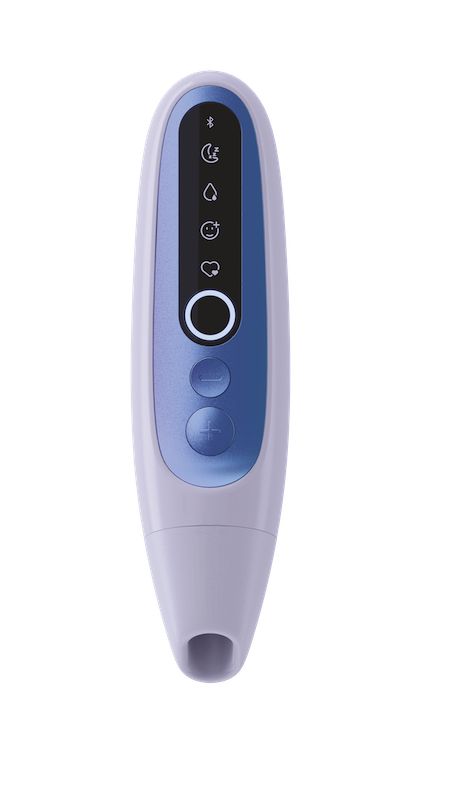
MenoPulse
Rather than building another product aimed at a single menopause symptom, we asked a different question: how could we build something specifically for women navigating hormonal life-stage changes?
MenoPulse uses the same Pleasure Air Technology™ investigated in the research and was designed around menopause. It combines:
- Gentle external clitoral stimulation
- Four menopause-focused wellbeing modes
- Symptom tracking
- Personalised routines
- Educational content
- The SheHerMe companion app
Research never stops
The Kinsey Institute research gave MenoPulse its foundation. It is a starting point, not a conclusion.
We are committed to expanding what is known about women's intimate wellbeing during menopause. Our ongoing programme includes:
- Consumer effectiveness studies
- Objective physiological research
- Long-term wellbeing tracking
- Future collaborations with scientific partners
Research at a glance
| Stage | What it covered |
|---|---|
| Initial survey | 1,500 U.S. women aged 40–65, on menopause and sexual wellbeing |
| Phase 1 | 66 peri- and post-menopausal women over three months |
| Phase 2 | 12 women, with objective physiological measurements |
| Primary outcome | 92.9% reported improvement in at least one symptom over the study period.* |
| Additional finding | 32% reported that reaching orgasm felt easier.* |
| Insight | Women without orgasm difficulties generally reported greater symptom improvements |
| Next | Understanding how intimate wellbeing may influence broader menopause wellbeing |
About this research
The research was conducted by the Kinsey Institute at Indiana University in collaboration with Womanizer. Participants used the Womanizer Next, which incorporates the same Pleasure Air Technology™ used in MenoPulse. The study investigated the relationship between regular clitoral stimulation, orgasm and menopause symptoms; it did not evaluate MenoPulse itself. MenoPulse was developed afterwards, for women experiencing hormonal life-stage changes, combining that technology with menopause-focused modes, symptom tracking and the SheHerMe app.
*Source: Womanizer x Kinsey Institute Menopause Survey 2024. Online survey among a nationally representative sample of 1,500 U.S. women aged 40–65, conducted in May 2024.
*Based on Menopause & Masturbation Consumer Study 2025 by Womanizer & the Kinsey Institute evaluating Pleasure Air–type stimulation technology, as used in the MenoPulse. Study conducted with 66 women aged 40–75 over a 3-month period. Results reflect subjective user experiences and may not be representative of all users. Individual results may vary. For general wellness use only. Not a medical device. Not intended to diagnose, treat, cure, or prevent any disease.
Every menopause journey is unique.
But you don't have to navigate yours alone.
Whether you're looking for answers, personalised guidance or science-led wellbeing solutions, we're here to support you — every step of the way.